Updated
Bankura lies where the flat rice country of central Bengal begins to rise towards the Chota Nagpur Plateau. Its east is alluvial plain; its west is rolling red laterite with rocky hillocks and sal forest. Two hills stand above the rest: Biharinath, the highest in the district at about 450 m, and Susunia, known for a 4th-century rock inscription and for rock climbing. The Damodar marks the northern border, and the Dwarakeswar, Shilabati and Kangsabati cross the district; they run low in summer and flood in the monsoon.
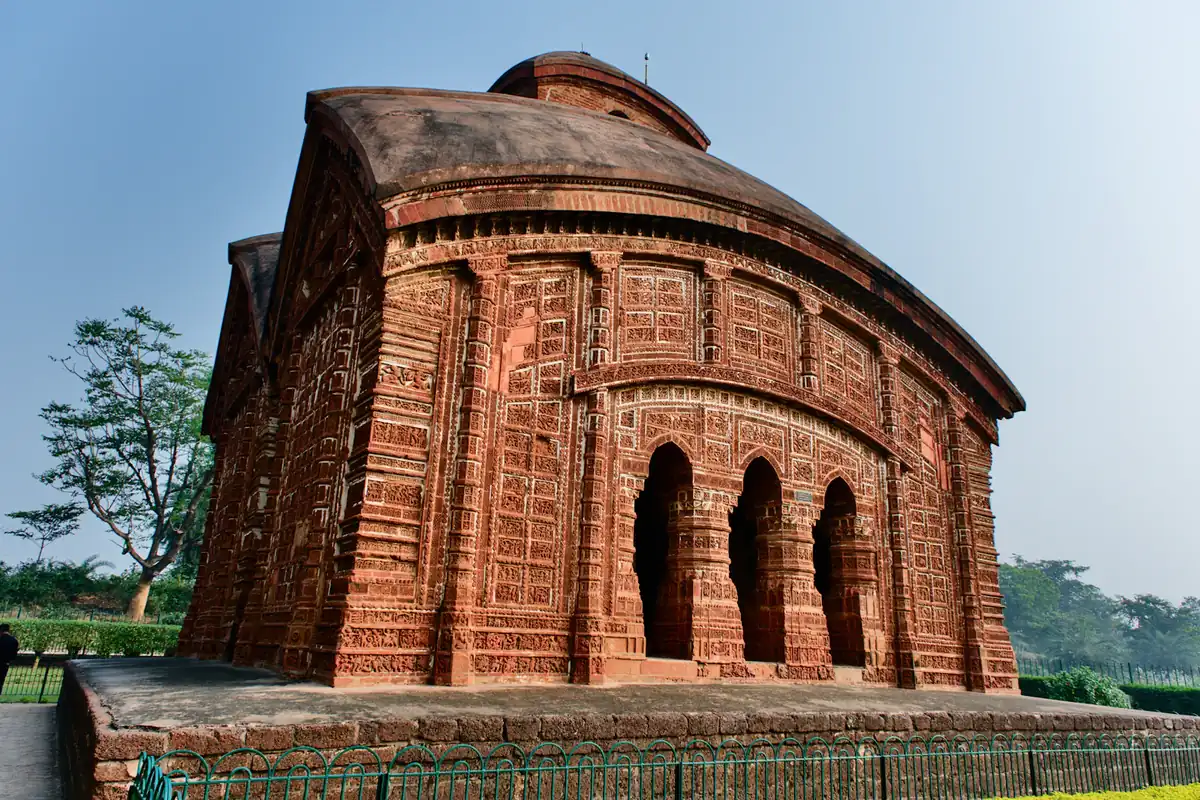
For most visitors, Bankura means Bishnupur. The Malla kings ruled Mallabhum from here for centuries, and as devoted Vaishnavas they filled their capital with brick and laterite temples covered in terracotta, among them Rasmancha, Jor Bangla, Shyam Rai and Madan Mohan. The British took over the region in 1765, and the modern district took shape in the 1880s. Older temples survive too, such as the brick Siddheswar temple at Bahulara.
In the south, the Kangsabati project's earthen dam at Mukutmanipur holds back a wide reservoir among hills, and the forests of Jhilimili continue towards the Purulia and Jhargram borders. Santal villages are common in the west; about 8% of the people speak Santali.
How to reach Bankura
By train. Bankura Junction and Bishnupur are on the Kharagpur–Bankura–Adra line of the South Eastern Railway, with direct express trains from Howrah and Santragachi. Check current timings with Indian Railways.
By road. National Highway 14 and State Highways 5 and 9 cross the district, linking it with Durgapur, Asansol, Kharagpur and Purulia.
By air. Kolkata (CCU) is the main international airport. Kazi Nazrul Islam Airport at Andal, in neighbouring Paschim Bardhaman, is closer for the north of the district.
Best time to visit
November to February is the most comfortable time, with dry, mild days. Summer, from March to early June, is fierce, with temperatures that can approach 45 °C. The monsoon, June to September, brings about 1,400 mm of rain a year and turns the forests green. In February and March, palash flowers across the western hills. The Bishnupur Mela is held from 23 to 27 December, and Durga Puja at Bishnupur's Mrinmoyee temple is one of the oldest in Bengal.
Crafts to look for
Bankura is one of the great craft districts of the state. Look for Baluchari silk saris woven in Bishnupur, terracotta from Bishnupur and the long-necked Bankura horse from Panchmura, Dokra metal casting in Netkamla and Bindhyajam near Susunia, stone carving at Susunia village and Bishnupur's round Dashavatar playing cards.
Sightseeing guides in Bankura
- RasmanchaBishnupur
- Jor Bangla TempleBishnupur
- Shyam Rai TempleBishnupur
- Madan Mohan TempleBishnupur
- Dalmadal CannonBishnupur
- Lalji TempleBishnupur
- Jor MandirBishnupur
- Mrinmoyee TempleBishnupur
- Baluchari Saris and Bishnupur CraftsBishnupur
Bankura district: questions
What is Bankura district famous for?
The terracotta temples of Bishnupur, Baluchari saris, the Bankura terracotta horse, and its hills and forests, such as Susunia, Biharinath and Mukutmanipur.
Which is the highest hill in Bankura?
Biharinath, at about 450 m.
What is the main language in Bankura?
Bangla, spoken by about nine in ten people; Santali is the second language.
Which is the best base for exploring Bankura?
Bishnupur for the temples and crafts, and Bankura town for Susunia, Biharinath and the south.