Updated
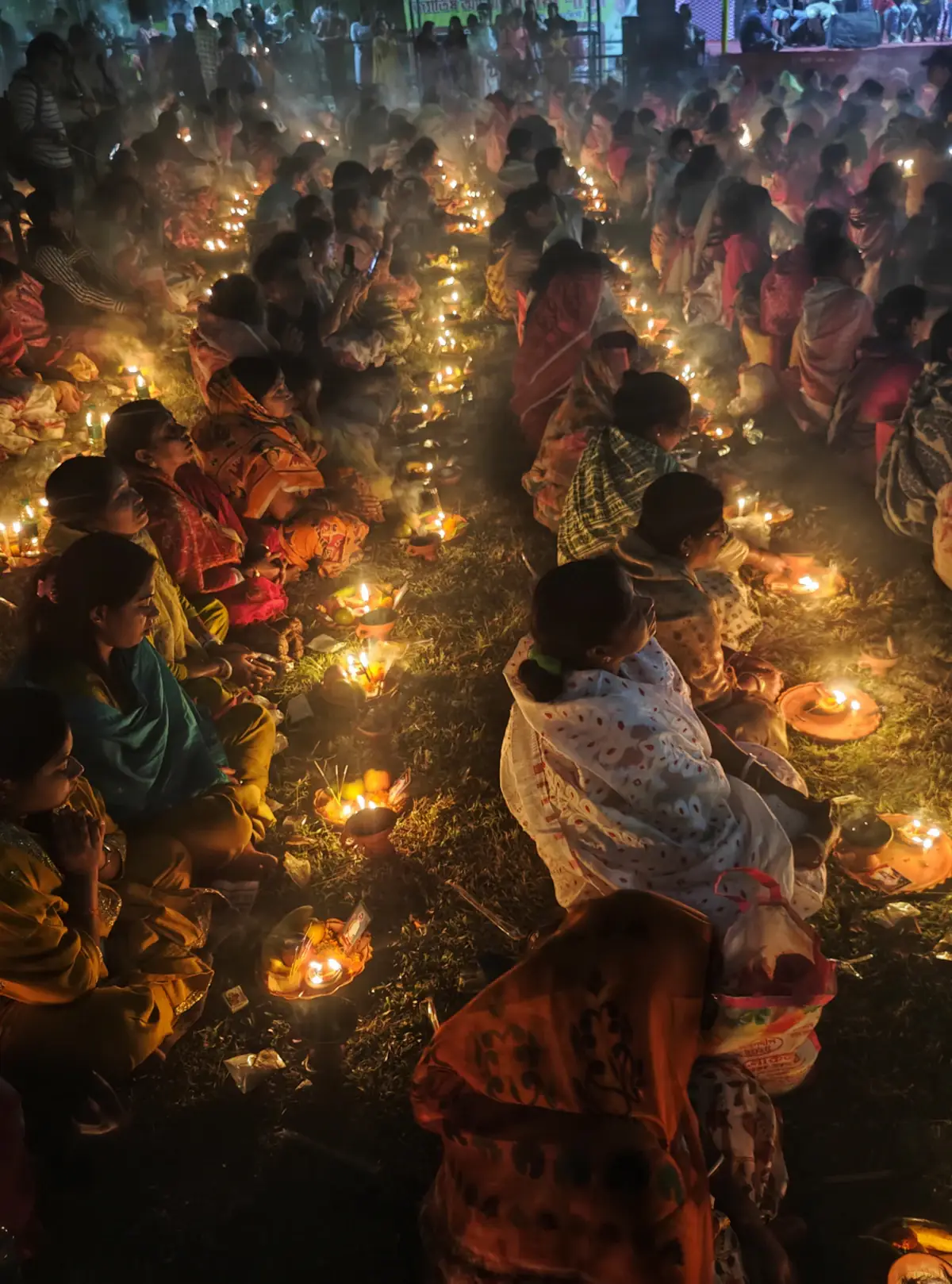
Kojagari Lakshmi Puja is the worship of Lakshmi, goddess of wealth and the harvest, on the full-moon night that follows Durga Puja. Where much of India honours Lakshmi on Diwali, most households in Paschim Banga worship her on this autumn full moon instead. It is above all a home festival: floors are painted with rice-paste alpana, offerings are cooked in the family kitchen, and neighbours drop by for prasad.
Origins and meaning
The name comes from the question ko jagarti?, "who is awake?". On this night, it is believed, Lakshmi travels from house to house and blesses those who keep vigil, which is why many families stay up late after the worship.
The festival falls on the full moon of the lunar month of Ashwin, roughly five days after the Durga Puja images are immersed. Most families in Paschim Banga, and especially those with roots in eastern Bengal, follow this date; some households of western Bengal, and families from north India, worship Lakshmi on the new moon of Diwali instead. In Bengal she is shown seated on a lotus with a pot of wealth in her lap and her owl at her feet.
Rituals: alpana, offerings and the vigil
Alpana. Women of the household draw alpana with a white paste traditionally made from soaked rice. A pair of small footprints is essential: the prints run from the door into the house, sometimes up the stairs, so the goddess can find her way in. They are often joined by curling patterns that stand for stalks of paddy.
The altar. Water pitchers topped with coconuts are placed at the entrance and sheaves of ripe paddy are hung up as signs of plenty. The goddess is worshipped at a small home altar, usually with a clay image.
Food. The offerings are vegetarian and homely: khichuri, fried vegetables, fresh fruit, and dry sweets such as coconut naru, puffed-rice moa and fried palm-fruit taaler bora. A sweet milk pudding is sometimes left out in the moonlight and shared the next day. Older families once sang the Lakshmir Panchali, a verse narrative read aloud during the puja, though the custom is fading.
Where to experience it
Unlike Durga or Kali Puja, Lakshmi Puja has few big public pandals, though some neighbourhood clubs in Kolkata and the towns keep images up for the evening. The real festival is indoors. If friends in Paschim Banga invite you home for the evening, accept: you will see the alpana and share the prasad.
Kojagari Lakshmi Puja: questions
When is Kojagari Lakshmi Puja?
On the full moon of Ashwin, usually in October and about five days after Vijaya Dashami, the last day of Durga Puja.
What does Kojagari mean?
It comes from "ko jagarti", "who is awake?", the question Lakshmi is believed to ask as she visits homes on the full-moon night.
Why are footprints drawn for Lakshmi Puja?
The alpana footprints lead from the doorway into the house so the goddess can find her way in and bless the household.
Is Lakshmi Puja in Bengal the same as Diwali Lakshmi Puja?
No. Most families in Paschim Banga worship Lakshmi on the Ashwin full moon; the Diwali new moon is given to Kali Puja, though some households also worship Lakshmi then.