Updated
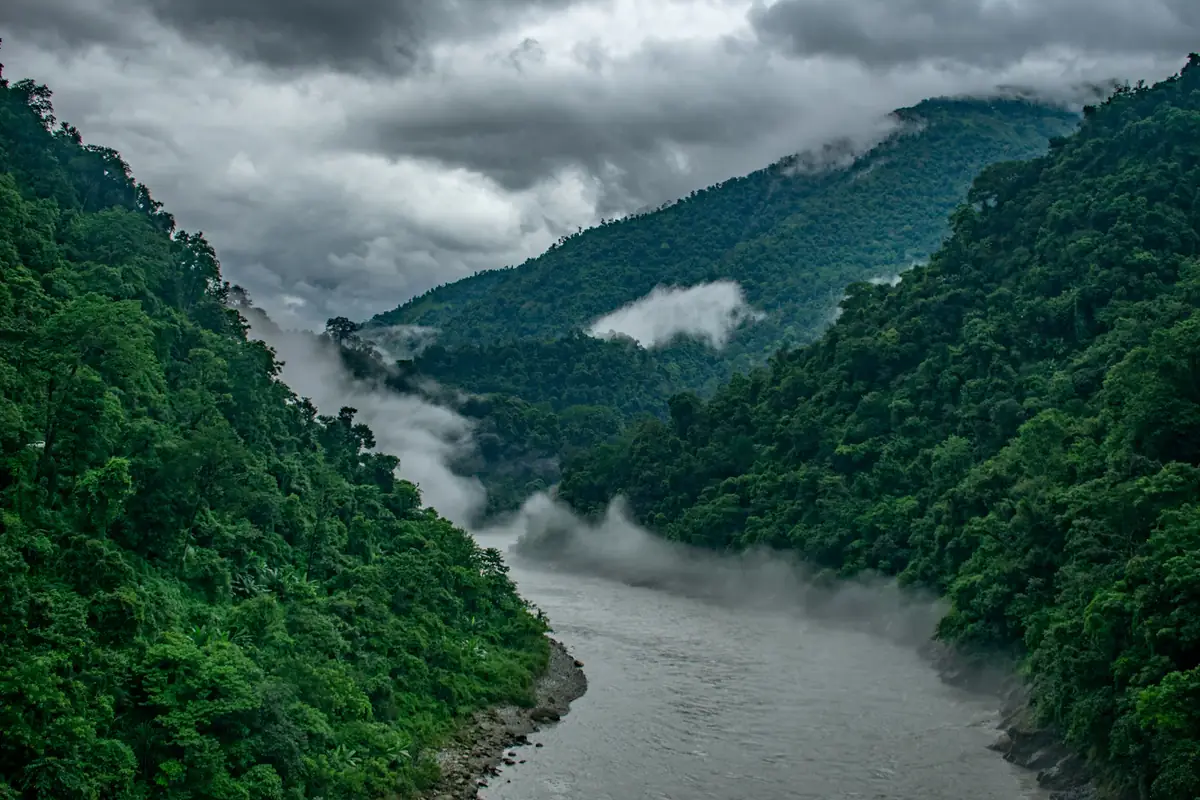
Mahananda Wildlife Sanctuary covers the forested foothills between the Teesta and Mahananda rivers, just north of Siliguri in Darjeeling district. It climbs from sal forest near Sukna, about 13 km from the city, to the hills of Latpanchar near Kurseong, and is one of the easiest places in north Paschim Banga to see forest and wildlife without a long journey.
About the sanctuary
The forest was first protected as a game sanctuary in 1955 and became a wildlife sanctuary in 1959, mainly to protect gaur (Indian bison) and tigers; some sources give 1976 as the year of its present status. Its area is usually given as 158 or 159 square kilometres.
The land rises from about 166 m in the Sukna range to about 1,500 m at Latkothi. Latpanchar, in the Kurseong hills, is the highest part of the sanctuary, at an average of about 1,400 m. Around 330 plant species have been recorded, among them sal, teak, jarul and bamboo.
Wildlife and birds
Elephants are the best-known residents: about 150 move through the sanctuary each year on their migration routes across Paschim Banga, Nepal and Assam. Other mammals include gaur, sambar, chital, barking deer, leopard, Himalayan black bear, serow, binturong and rhesus macaques; tigers and clouded leopards are recorded but rarely seen.
More than 300 bird species have been reported, and the sanctuary is listed as an Important Bird Area. It is known for hornbills, including the great, Oriental pied and rufous-necked hornbill, and for flycatchers, minivets, sunbirds and the racket-tailed drongo.
Watchtowers help: Laltong on the bank of the Teesta is good for elephants, and Gulma, a former railway cabin in the core area, for deer and gaur.
How to visit
Sukna, about 13 km from Siliguri and 28 km from Bagdogra (IXB), is the main entrance, about 30 minutes by road. Latpanchar, the hill section, is a separate trip by road into the Kurseong hills. Visit early in the morning or late in the afternoon, when animals come to the salt licks. Entry rules, fees and seasonal closures are set by the West Bengal forest department, so check before you go.
Mahananda Wildlife Sanctuary: questions
How far is Mahananda Wildlife Sanctuary from Siliguri?
Sukna, the main entrance, is about 13 km from Siliguri, around 30 minutes by road.
Which animals live in Mahananda Wildlife Sanctuary?
Elephants, gaur, sambar, chital, barking deer, leopard and Himalayan black bear, with tigers and clouded leopards recorded but rarely seen. More than 300 bird species have been reported, including hornbills.
Where is Latpanchar?
Latpanchar is in the Kurseong hills and forms the highest part of the sanctuary, at around 1,400 m. It is a separate trip by road from Sukna and Siliguri.
When was Mahananda Wildlife Sanctuary established?
It began as a game sanctuary in 1955 and became a wildlife sanctuary in 1959; some sources give 1976 for its present status.