Updated
The Qutb Shahi Mosque at Pandua was built in 1582 or 1583 by a descendant of the Sufi saint Nur Qutb-ul-Alam, whose shrine stands nearby. It is also called the Sona Masjid, the golden mosque, because its domes were once gilded. Built just after the Mughal conquest of Bengal, it is one of the last monuments of the sultanate building tradition at Pandua.
History
Nur Qutb-ul-Alam was a Sufi saint of 15th-century Pandua, and his shrine, the Chhoti Dargah, was built in 1427, twelve years after his death. More than a century and a half later, one of his descendants, named by Live History India as Mohammed al-Khalidi, built this mosque in his honour. The date is given as 1582 by some sources and 1583 by others; the difference comes from converting the Hijri year 990.
By then Gour and Pandua were no longer capitals: the Mughals had defeated the last Karrani sultan in 1576. The mosque shows that the saintly families of Pandua kept building after the court had gone.
Architecture
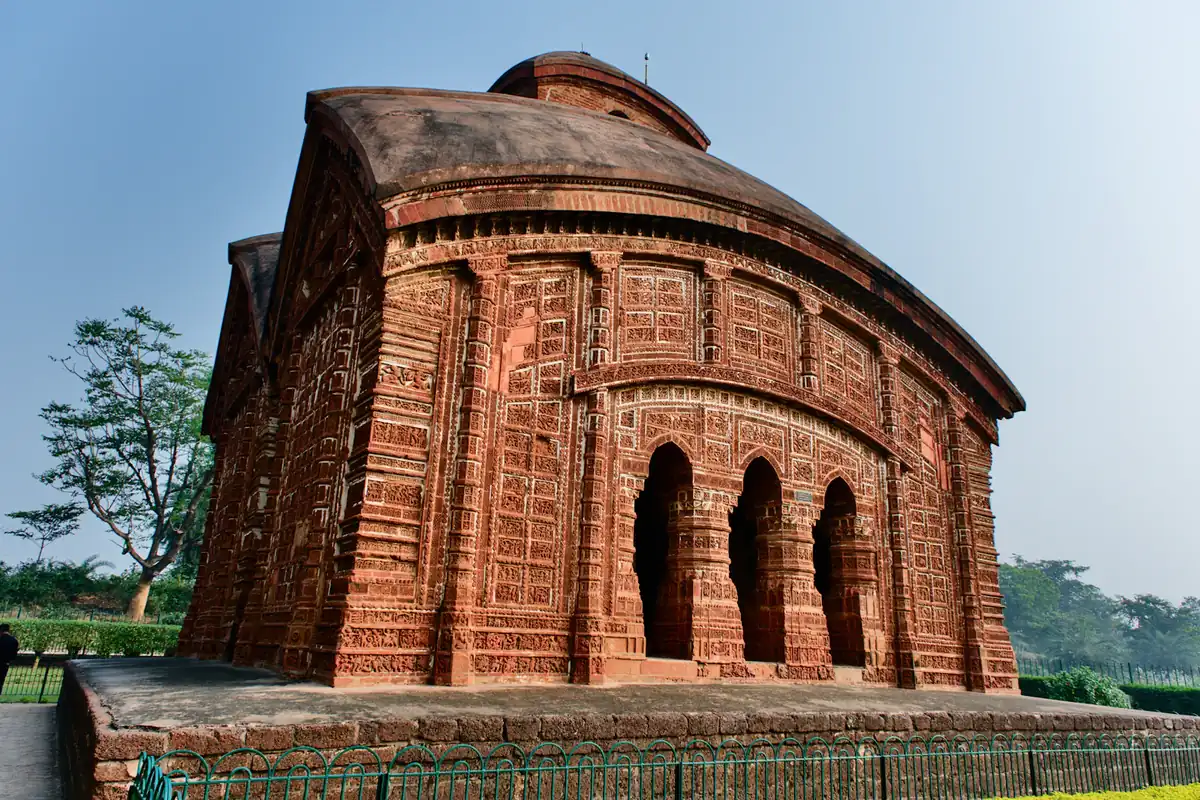
According to Banglapedia, the mosque measures about 25.1 m by 11.5 m. It has a brick core faced with plain stone slabs on the outside, like the Bara Sona Masjid at Gour. It was roofed by ten domes on pendentives, carried on multifaceted stone columns, but the roof has fallen. The stone pillars and the minbar remain, and the five mihrabs are in poor condition. Unlike the Adina Mosque, it is an enclosed mosque without a courtyard.
Traces of gilding have been found, which supports the story behind the name Sona Masjid. A stone platform in front of the minbar is probably the grave of a local holy man, added later.
Visiting the Qutb Shahi Mosque
The mosque lies between the Eklakhi Mausoleum and the shrine of Nur Qutb-ul-Alam, and a paved path leads to it from the Eklakhi through the village. It makes a quiet stop between the Eklakhi and the Adina Mosque on a half-day trip from Malda town.
Qutb Shahi Mosque: questions
Who built the Qutb Shahi Mosque?
A descendant of the Sufi saint Nur Qutb-ul-Alam, in 1582 or 1583.
Why is it called the Sona Masjid?
Its domes were gilded, and traces of gilding have been found. It is one of three Sona (golden) mosques in the Gour–Pandua area.
Does the Qutb Shahi Mosque have a roof?
No. Its ten domes have fallen, but the stone pillars, minbar and walls survive.
Where is the Qutb Shahi Mosque?
In Pandua, Malda district, between the Eklakhi Mausoleum and the shrine of Nur Qutb-ul-Alam.